

Label Offset Printing

Get Latest Quote
overview
Label Offset Printing in Delhi by Shree Vishnu Press
Labels are everywhere: on bottles, jars, boxes, cartons, garments and shipping parcels. They tell customers what a product is, who made it and how to use it, and they quietly shape how much a buyer trusts what they are holding. Label offset printing is one of the most dependable ways to produce labels with sharp text, rich colour and consistent quality across thousands of pieces. At Shree Vishnu Press, we help Delhi businesses plan, print and finish labels that suit their products. This guide explains what offset label printing is, how it compares with other methods, which label types and materials to choose, what affects the cost, and how to choose the right partner.
In-House Shree Vishnu Press Printing Facility
Our Printing Process
A simple 4-step process from your first enquiry to final delivery.
-
1Step 1
Share Requirement
Tell us your product, size, quantity and paper. We send a clear quote and delivery time.
-
2Step 2
Design & Proof
We check your design and share a proof. Printing starts only after your approval.
-
3Step 3
Printing & Finishing
Your job is printed with colour checks, then cut, laminated, folded or bound as needed.
-
4Step 4
Quality Check & Delivery
Final inspection, safe packing and on-time delivery to your doorstep.
What Is Label Offset Printing?
Offset printing transfers your design from a metal plate to a rubber blanket and then onto the label material. Because the plate never touches the material directly, the print stays clean and sharp, even on tiny text, thin lines and detailed logos. After printing, labels can be coated, laminated, foiled, embossed and die-cut into the exact shape you need.
Offset label printing is usually done on large sheets of self-adhesive paper or film, or on paper that will be glued on. Colours are built from four process inks (cyan, magenta, yellow and black), and Pantone spot colours can be added when your brand colour must match exactly. Plates are made once and reused, so each additional label costs less than the first. This is why offset is a favourite for businesses that need medium and large quantities with consistent quality.
Types of Printed Labels
Not all printed labels are the same. The main types are:
- Self-adhesive labels: a sticky back with a protective liner, supplied in sheets or rolls. They suit most bottles, jars, boxes and cartons.
- Wet-glue labels: paper labels that are glued on during filling, common for large volumes on production lines.
- Hang tags and swing tags: printed on card and attached to products such as garments and gifts.
- Fabric labels: printed on satin or cotton and sewn into clothing.
- Seals and tamper-evident strips: used to close packs and show if they have been opened.
- Barcode, price and shipping labels: used for retail, storage and dispatch.
Offset vs Flexographic vs Digital Label Printing
Three printing methods are commonly used for labels, and each has its strengths. Offset suits detailed, colourful labels in steady volumes. Flexographic printing is widely used for high-volume roll labels. Digital printing suits very short runs, trial products and labels that change often. The table below compares them so that you can decide what fits your project.
| Feature | Offset | Flexographic | Digital |
|---|---|---|---|
|
Best quantity |
Medium to large runs |
Large roll runs |
Very short runs and samples |
|
Image detail |
Excellent for fine text and photographs |
Good, with improving quality |
Good for photographs and variable content |
|
Setup cost |
Plates needed, so cost is spread over the run |
Plates needed for each colour |
No plates, so low setup cost |
|
Cost per label |
Falls sharply as quantity rises |
Low at high volume |
Stays fairly constant |
|
Personalisation |
Limited, since each version needs its own plates |
Limited |
Easy, with changing text or codes |
The right method depends on your quantity, design and budget. If you are unsure, tell us what you need and we will give honest advice, even if a different method suits you better. Many brands also start with a short digital trial and move to offset once the design is final and demand is steady.
Label Printing Services: What We Offer
Our label printing services cover the labels that businesses use most, and each can be tailored to your product. We have dedicated pages for the most common needs:
- Custom label offset printing for labels in any size or shape.
- Custom product label offset printing for retail and shelf-ready products.
- Bottle label offset printing for liquids, jars and bottles.
- Cosmetic label offset printing for skincare and beauty brands.
- Pharma label offset printing for healthcare products.
- Cloth label offset printing for garments and fashion brands.
We also print matching packaging, so that your labels and boxes share the same look. See food packaging offset printing and packaging box offset printing for cartons and boxes, and custom offset stickers for adhesive products. Explore our full range of offset printing services or see finished work in our portfolio.
Materials and Adhesives
The material decides how well a label survives its life on the product. Self-adhesive art paper gives bright, sharp print at a low cost and suits dry products. Laminated or varnished paper resists scuffs and light splashes. White film, such as polypropylene, resists water and oil, which suits liquids and creams. Clear film gives a no-label look on glass and plastic, and vinyl suits damp or rough conditions.
The adhesive matters just as much. Glass, plastic, metal and cardboard surfaces each hold adhesive differently, and curved or squeezable packs need flexible labels. Tell us what your pack is made of, how it is filled and where it is stored, and we will recommend a suitable stock. We always suggest testing a sample on your own pack before ordering in bulk.
Finishes That Protect and Elevate
Finishing protects the print and shapes how a label looks and feels:
- Varnish: adds a light protective coat and improves colour depth at a modest cost.
- Gloss or matt lamination: protects against scratches, splashes and handling.
- Hot foil stamping: adds metallic detail for premium products.
- Embossing: creates a raised texture that customers can feel.
- Spot UV: highlights a logo or pattern with a glossy contrast on a matt label.
Artwork Tips for Better Label Printing
Good artwork prevents most printing problems, and it is the part of label printing that you control. Design at the exact label size and extend background colours 2 to 3 mm beyond the cut line, so that no white edge shows after trimming. Keep logos and important text well inside the edges. Use strong contrast between text and background, and avoid very thin fonts at small sizes.
Convert images to CMYK and use files of at least 300 dpi, because screen colours often look brighter than printed colours. Leave a flat, clear area for barcodes and for batch or date codes that are added later. If your label carries required information, such as ingredients, quantity or manufacturer details, check the current rules for your product category before finalising the text. We print approved artwork exactly as supplied, and we will point out anything that looks unclear.
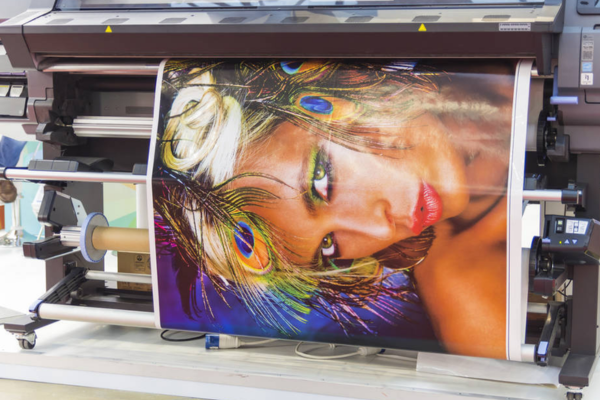
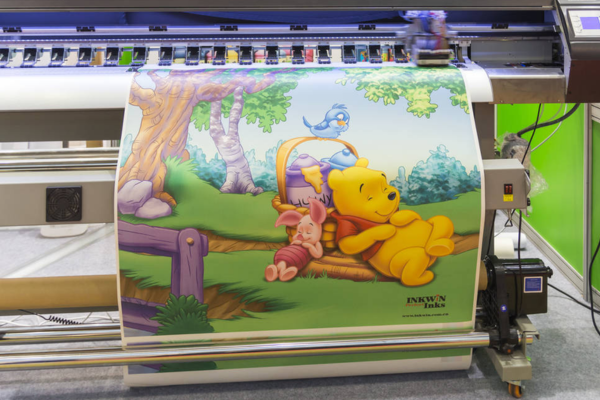
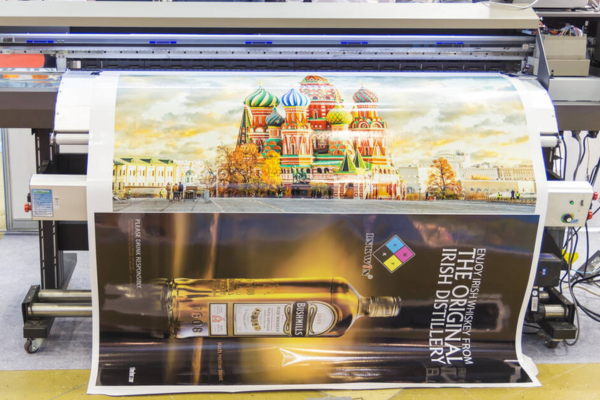
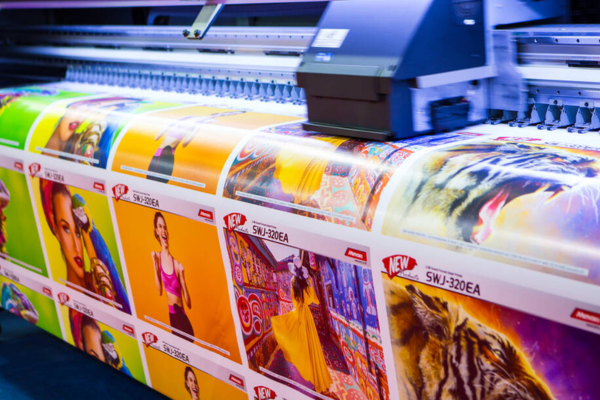
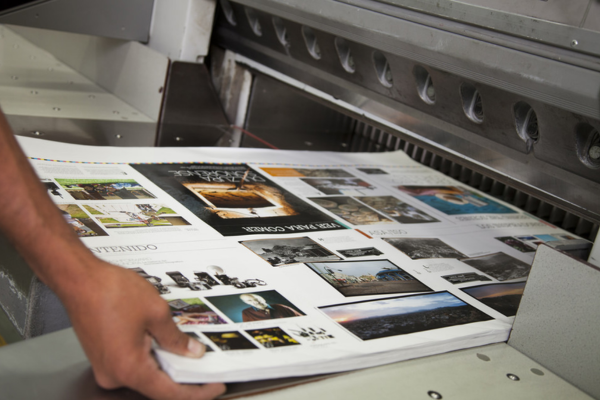
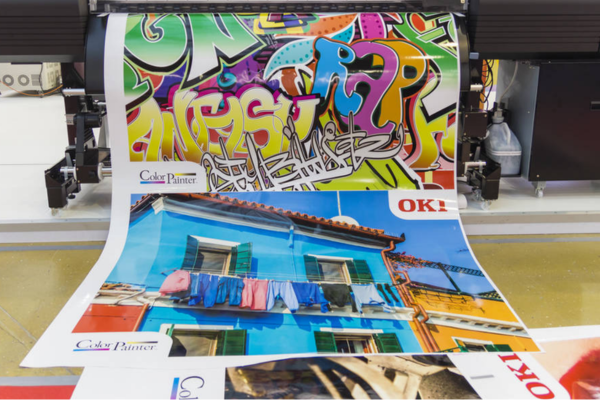
In-House Printing Facility
Custom Label Printing: Sizes, Shapes and Versions
Custom label printing means the label is made to fit your pack and your brand. Labels can be die-cut into rectangles, circles, ovals and custom outlines, and they can be supplied in sheets for hand application or in rolls for labelling machines. If you use a machine, share the core size, winding direction and maximum roll diameter.
Brands with several products can keep one layout and change only the name, colour band and weight for each variant. Send all the files together with the quantity for each version, and we will plan an efficient run. This keeps your range recognisable and your product label printing easy to manage.
What Affects the Cost of Label Printing?
Label pricing depends on the job. The main factors are:
- Quantity: plates and setup are shared across all labels, so larger runs lower the price per label.
- Material: film, vinyl and specialty stocks cost more than standard paper.
- Size and shape: large or complex shapes use more material and need special dies.
- Colours: full-colour designs and extra Pantone shades add plates and ink.
- Finishes: lamination, foil and embossing add material and labour.
- Number of versions: each variant adds artwork checks and plate changes.
- Timeline: urgent jobs need priority printing and cutting slots.
To receive an estimate for your exact labels, send the size, material, quantity and finish through our quote page.
Common Label Problems and How to Avoid Them
Benefits of Choosing Shree Vishnu Press
Most label complaints trace back to a few causes, and all of them can be prevented with planning:
- Peeling edges: usually caused by the wrong adhesive for the surface, or by labels that are too stiff for a curved pack. Choose the stock for your container.
- Wrinkling: a label that is too tall for a curve will crease. Measure the flat area before deciding on a size.
- Colour mismatch: screen colours often look brighter than print. Approve a proof and use Pantone matching for brand shades.
- Smudging or scuffing: unprotected ink can rub off. Varnish or lamination solves this.
- Barcodes that do not scan: low contrast or too little clear space is the usual cause. Keep codes dark on a light, flat area.

Our Process, Step by Step
A clear process protects quality and avoids costly reprints. Here is how a typical label order moves through our press:
- Requirement discussion: we note the product, pack, label size, quantity, finish and delivery date.
- Material advice: we suggest a label stock and adhesive that suit your pack.
- Artwork check: we review size, bleed, text clarity, barcode area and colour mode.
- Quotation and approval: you receive a clear estimate and confirm the specifications.
- Proofing: you approve a proof, including every line of text, before plates are made.
- Printing and finishing: colours are matched on the press, then coatings or foil are applied.
- Die-cutting and rolling: labels are cut to shape and supplied in sheets or rolls.
- Packing and delivery: labels are counted, packed carefully and dispatched on schedule.
How to Choose a Label Printing Company
Labels are small, but mistakes on thousands of pieces are expensive. When you compare a label printing company with other suppliers, check the following:
- Ask for printed samples on the material you plan to use.
- Test a sample on your own pack under normal storage and handling.
- Confirm that you will approve a proof before the full run begins.
- Check that printing, finishing and die-cutting are all covered.
- Compare quotations on clarity and delivery time, not only on price.
You can learn more about us on the about us page. We are happy to answer your questions before you commit.

About the Author
Shree Vishnu Press is a trusted printing company in Delhi, known for quality work, honest pricing and on-time delivery. Our team handles everything from stationery to books, catalogues and packaging, and shares practical printing advice based on real, hands-on experience with publishers, schools and businesses.
Conclusion
Label offset printing gives your products sharp detail, accurate colour and a finish that holds up in real use, with a lower cost per label as quantities grow. Whether you need bottle labels, product labels, cosmetic labels, healthcare labels or garment labels, the keys to a good result are the right method, the right material and adhesive, careful artwork and an approved proof. Shree Vishnu Press offers complete label printing support for businesses across Delhi, from artwork review to finished rolls and sheets. To discuss your project, visit our contact page or request a price on the quote page, and our team will guide you from design to delivery.
FAQs for Offset Printing Services
Label offset printing is a process where your label design is printed on adhesive paper, film or plain paper using plates and a rubber blanket. The labels are then coated, die-cut and finished. It gives sharp graphics and accurate colours, especially for medium and large quantities.
The cost depends on quantity, material, label size and shape, number of colours, finishing and number of versions. Larger quantities lower the price per label. Share your requirements through our quote page and we will prepare an estimate for your exact labels.
Digital printing suits very short runs and labels that change often. Offset printing suits larger runs, fine detail and exact colour matching, and it lowers the cost per label as quantity increases. Tell us your quantity and we will recommend the better fit.
Self-adhesive paper suits dry products, laminated paper suits handled products, and white film suits wet, oily or chilled packs. Clear film gives a no-label look on glass. Tell us about your pack and we will recommend a suitable material.
Offset printing is most economical in larger runs because plate and die costs are shared across all labels. The practical minimum depends on the material and shape, so contact us with your requirement and we will suggest the best option.
Yes. Labels can be die-cut into rectangles, circles, ovals and custom shapes that follow your logo or pack. A new shape needs a cutting die, which is usually a one-time cost that can be reused for repeat orders.
Yes, labels can be supplied in rolls or sheets. For machine application, share the core size, winding direction and maximum roll diameter of your machine so that the rolls are made to suit it.
Send a print-ready PDF at the exact label size. Use CMYK colour mode, images of at least 300 dpi, outlined or embedded fonts and 2 to 3 mm bleed. If your file is not ready, tell us and we will explain what needs correction.
Yes. We share a proof for your approval before plates are made and printing begins. This lets you check text, colours and layout so that mistakes are corrected before the full run.
Ask for printed samples, test them on your own pack, and confirm that proofs are approved before printing. Request a written quotation with delivery time. Visit our contact page to start a conversation.
What Our Customers Say
Discover how Shree Vishnu Press supports businesses, schools and publishers with professional printing, packaging and publishing solutions.
Write a Google ReviewOffset Printing In Delhi,
Label Offset Printing, label printing services, label printing, offset label printing, custom label printing, printed labels, product label printing, label printing company
Label Offset Printing, label printing services, label printing, offset label printing, custom label printing, printed labels, product label printing, label printing company
Label Offset Printing, label printing services, label printing, offset label printing, custom label printing, printed labels, product label printing, label printing company